Las Orcas
Selling a Pacific dream across a border.
3D Renderings
Virtual Tours
Website Design & Development
On-Brand Collateral Social Media Copywriting

On the coast of Oaxaca, in a pocket of Puerto Escondido called La Foresta, seven villas were coming. Las Orcas was small on purpose: an intimate, eco-conscious enclave a minute's walk from the sand, designed by Robert Couturier, an architect whose name carries weight far beyond this coast. The land was rare, the design was rarer, and the place itself was on the edge of being discovered by the rest of the world.
There was just one problem. The people most likely to buy were in the United States, and the villas were in Mexico, on a coast many of them had never seen. They were being asked to commit serious money to a home in another country, designed by an architect whose vision lived, for now, only on paper. Down here the beach was already real. The villas were not.
That's the distance we were brought in to close. Not just the distance between a buyer and an unbuilt home, but the distance between two countries, and between a renowned architect's vision and what a stranger could actually believe from a screen a few thousand miles away.
Buying a home they had never stood in
A buyer standing on the site in Puerto Escondido doesn't need much convincing. The light, the air, the sound of the Pacific does the work. But almost no one buying here was standing on the site. They were in California, in Texas, in New York, deciding from a laptop whether a place they'd never visited was worth a life-changing sum.
So everything we made had to do the job the site couldn't do from that far away. It had to bring the feeling of the coast to a buyer who couldn't come to the coast, and it had to make Couturier's vision feel less like a promise and more like something that already existed.
It began with the architect's drawings
It began with the architect's drawings
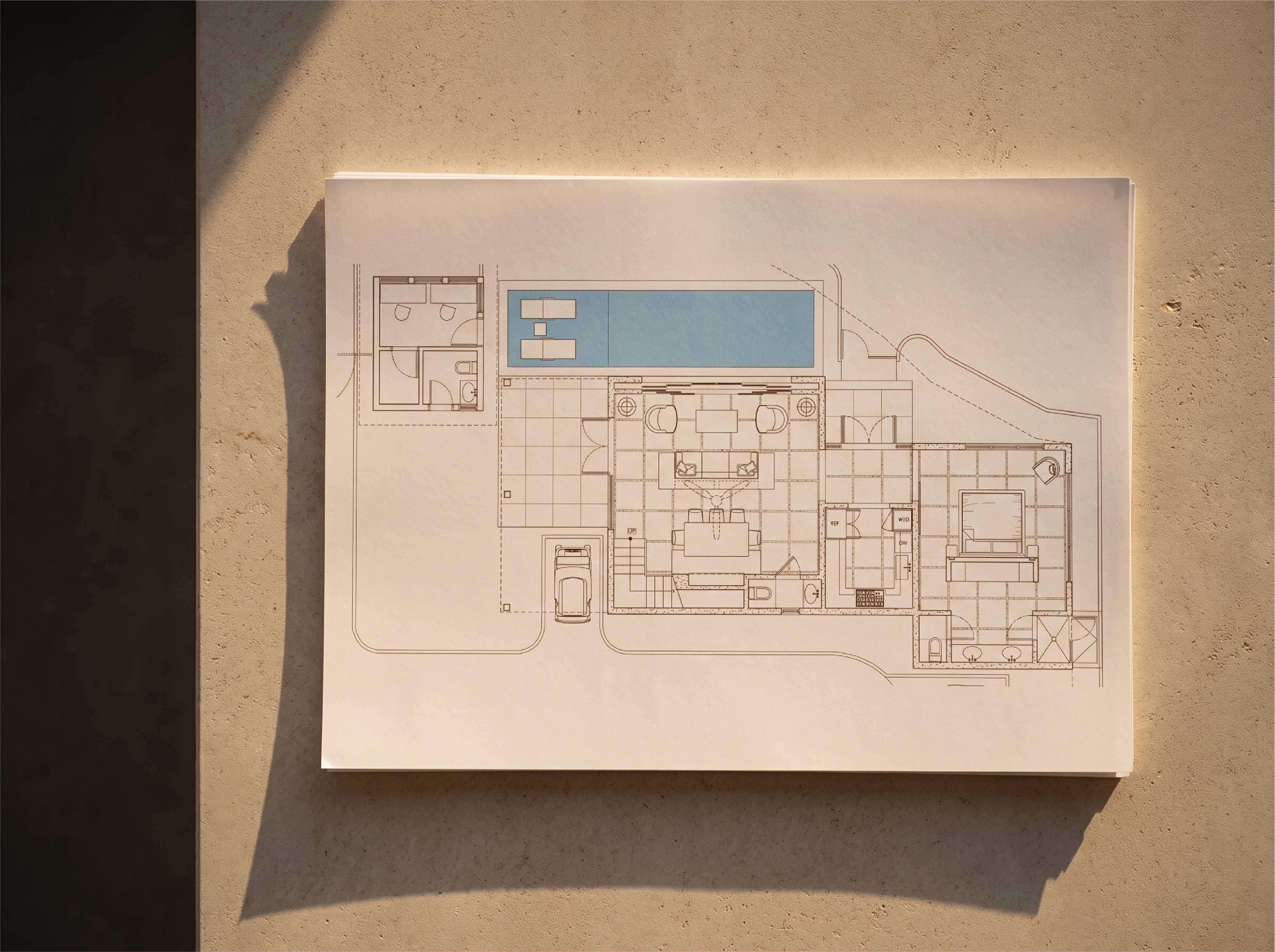
Plans are precise, exact, and silent on the one thing that sells a home. They give you the dimensions, the flow, the proportions, all the truth of the architecture and none of its feeling. A drawing can show you where a wall is. It can't show you the colour of that wall at five in the afternoon, or how the Pacific light falls across it. Our whole job was to turn the one into the other faithfully, to make exact lines into a place a stranger could love, without ever bending the truth of what was actually being built.
Getting the vision right
Honouring the architecture was the quiet, hard part. When you render the work of an architect like Couturier, close enough isn't close enough. The whole value of the project lives in the precision of his vision, and our renders had to hold that precision, or they'd undersell the very thing buyers were paying for.

So we started from the real materials. The villas use chukum, a traditional Mexican plaster, hand-applied, with a warmth and depth that machine-made surfaces can't fake. And the exact shade was everything. Too cool and it looked synthetic; too warm and it lost its calm. We worked the material against the references until the colour was true.

That shade of pink became the thing we obsessed over, until the plaster in the render looked like the plaster you'd run your hand across once it was built. It is a small thing, a colour, and it was the whole thing. Get it right and the architecture reads as real. Get it wrong and the dream cheapens.
Show them exactly where they'd be
Faithful architecture earned half the trust. The other half was the place itself, and here a remote buyer wants the thing brochures usually hide: where is this, really? How close is the beach, actually? What's around it? What am I not being shown?

So we answered it head-on. We built an aerial that showed Las Orcas exactly as it sits, the true walk to the sand, the real surroundings, the honest lay of the land. Not a flattering angle that hides what's next door, but a clear, accurate view a buyer could rely on. For someone deciding from another country, that honesty is worth more than any amount of polish. You can't fall for a place until you trust what you're being shown of it.
A place you could stand inside, from anywhere
Stills make you believe. Motion makes you feel like you're already there.
The virtual tours let a buyer in another country move through a villa that didn't exist yet, feel its proportions, follow the light from room to room, step out toward the water. For someone who couldn't book a flight to walk the site, this was the closest thing to standing on the coast, and it turned an abstract purchase into a place they could imagine waking up in.
What the vision became
This is what the precision was for. Not drawings, not samples, but a place a stranger could fall for from the other side of a border.


An online home for the brand
The vision needed a home, and a voice. We designed and built the website as the place where a faraway buyer's whole journey happened: drawn in by the coast, convinced by the architecture, reassured by the detail, guided toward the next step. Working within the existing brand, we made the collateral and the social presence that kept Las Orcas consistent everywhere a buyer might first encounter it, and we wrote the copy for the person deciding from afar: the dream first, the substance right behind it.
It worked where it mattered most: at the very start. In early presales, right after launch, the first villas found their buyers, people committing to an unbuilt home, in another country, on a coast they trusted us to show them honestly.
The renders didn't just illustrate Las Orcas.
They made a Pacific coast believable from thousands of miles away.
“Great quality renders, and they took the time to get the details correct. That mattered to us. We were selling something that didn't exist yet, to buyers who couldn't visit, so the images had to be right. And they were.”
-Tyler Peairs
Las Orcas