Coeur
Developmental Renderings
Interior Visualization
Material & Cabinetry Studies

Most of the work in this studio is about selling a home to someone who hasn't seen it. Coeur is the exception, and the exception taught us something.
Coeur is a design and cabinetry firm in Denver. They aren't trying to convince a stranger to buy an unbuilt house. They are designing one, well, for a client who trusts them. Their taste is the product: the marble they choose, the cabinet fronts they specify, the exact bronze of a faucet. That is harder to get right than it sounds, because a designer this good is making decisions they cannot fully see.

There is a quiet problem with designing beautiful things. You choose a book-matched marble, a woven-cane cabinet door, an aged bronze against warm oak. On paper, on a materials board, in your head, it works. But you do not truly see it, all of it together, in real light, at real scale, until it is built. And built is the most expensive moment to discover you were wrong.
Coeur's designers had extraordinary instincts and no way to check them. They could specify a kitchen with total confidence and still be guessing at how it would feel to stand in. Between the decision and the proof sat months and a great deal of money.
That gap is where we came in.
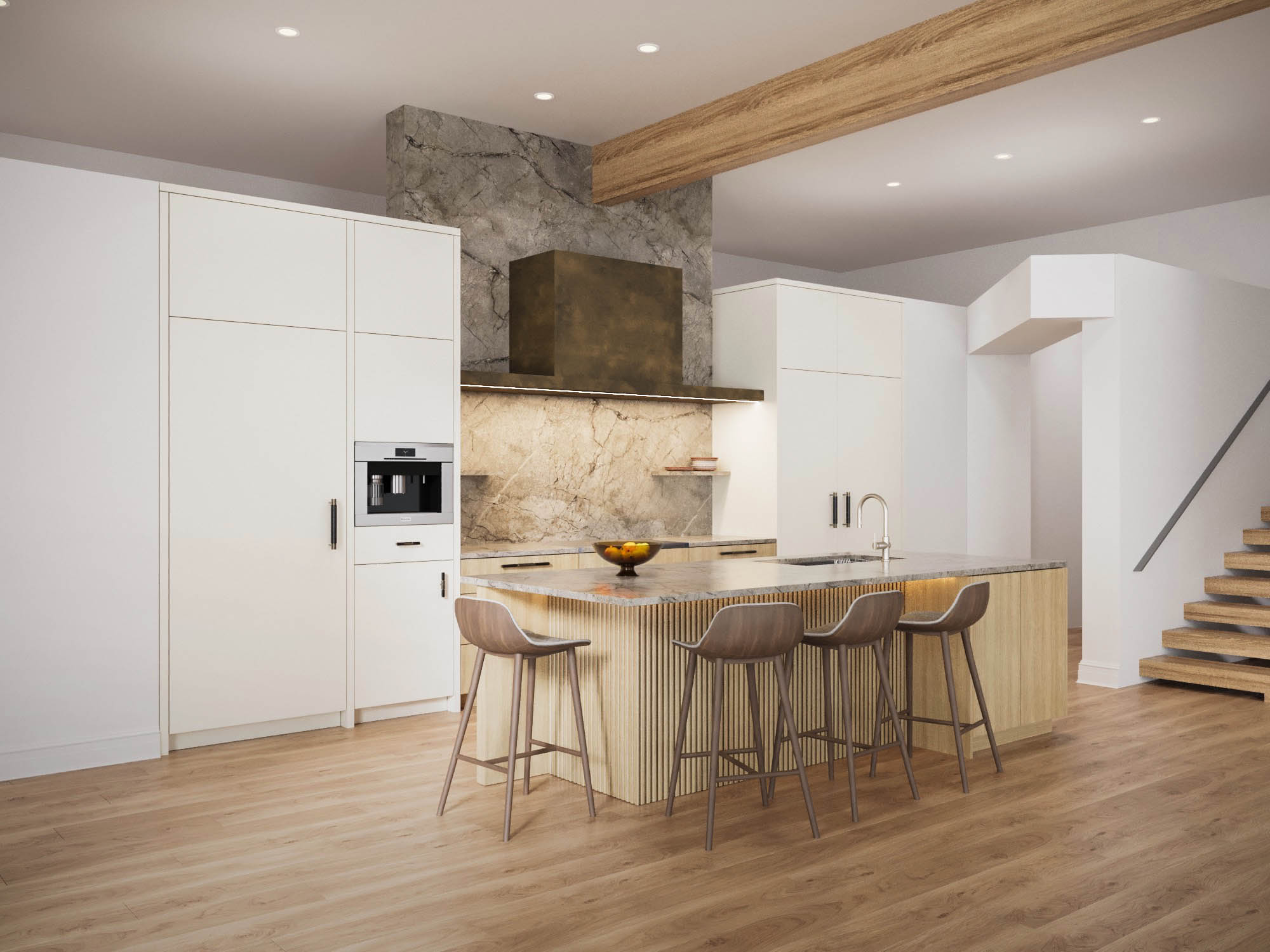
Jason Pogoloff, Coeur's Design Director, brought us a single kitchen to begin with. A residence called Dinsdale, classical, full of natural light. He sent the drawings and the material references, and we got to work.
A first project sets the tone for everything that might follow it. Get the cabinetry, the stone, and the light right, and you have shown a design team you can be trusted with the things they care most about. That was the standard Dinsdale had to meet, not to pass a test, but to be worth building a relationship on.

Built to the letter
So we built it exactly. Every cabinet, every fixture, every material modeled custom rather than pulled from a library, because a library flattens the specific choices that make a designer's work theirs.
The question was never whether it looked nice. It was whether it looked true enough to design from. Whether the book-matched marble ran continuous across the backsplash the way the real slab would. Whether the cane weave on a cabinet front read as woven rather than printed. Whether the bronze had age in it. A render that flatters tells a designer what they hoped for. A render that tells the truth tells them what they actually specified, and only the second kind is any use before something gets built.


That was what Dinsdale had to be. Not a flattering picture of Coeur's kitchen, but an accurate one, precise enough that they could look at it and know, before a single cabinet was fabricated, exactly what they were about to build.
What seeing it early changed
The render stopped being a picture of the work and became part of it.
Coeur could now see a decision while it was still a decision. Catch a material that did not sit right before it was ordered. Adjust a camera to understand a sightline. Hand a client an image of the actual room instead of asking them to trust a mood board. The conversation moved from roughly the idea to exactly this, and it kept pace with how they worked, fast enough that the visualization was never the thing everyone waited on.
One kitchen became many
Dinsdale was meant to be a single project. It became the first of a great many.




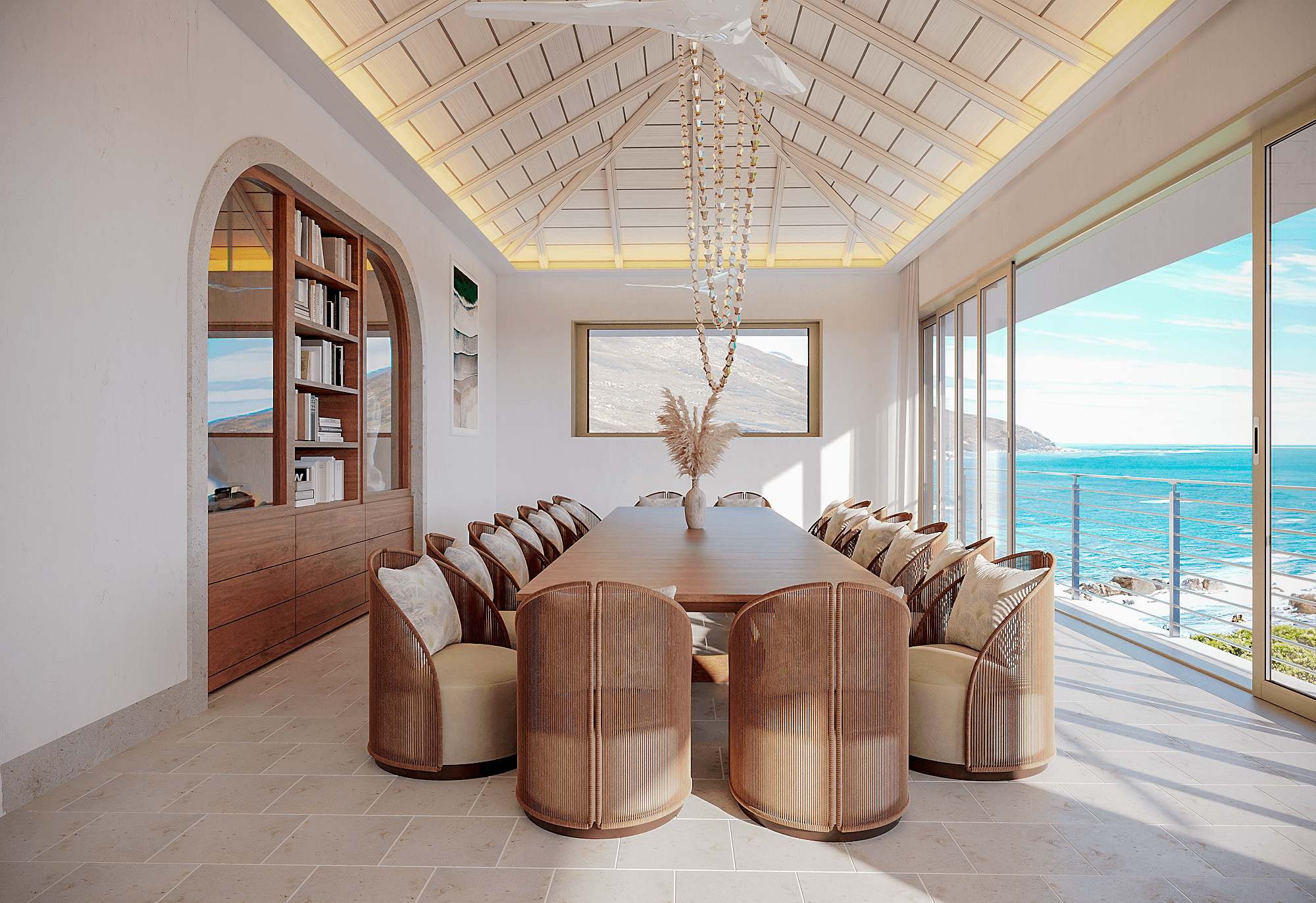
What began with one kitchen settled into a standing role. We render Coeur's work as they design it, project after project, an extension of their team rather than a vendor they call when something needs a picture. They bring the taste. We make it visible, early enough that seeing it can still change it.

The collaboration that started with one kitchen in Denver continues today, project after project, with a design team that sees its own work more clearly for having us in the room.